
What Sunsama does well
Sunsama's daily planning experience is genuinely well designed: it pulls tasks from your other tools, helps you build a realistic time-boxed day instead of an infinite backlog, and layers on habits like a daily shutdown ritual. For someone who already has their work tools sorted and just wants a calmer, more intentional way to plan each day across them, it's a polished, purpose-built layer.
Where Sunsama gets stretched for solopreneurs
The planner needs something to plan
Sunsama doesn't hold your client work itself — it imports tasks from Asana, Trello, ClickUp, Todoist, or similar and arranges them into your day. As a solopreneur, you're still paying for and maintaining a separate task tool underneath, then paying Sunsama to make sense of it every morning.
Client work needs more than a task list
A solopreneur's day isn't just tasks — it's a client wanting to book a call, a contract that needs a signature, a kickoff meeting to run. None of that is Sunsama's job, so it routes back out to Calendly, DocuSign, and Zoom, each with its own login and its own bill.
Daily planning doesn't fix scattered work
Time-boxing a calm day is genuinely useful, but it treats a symptom. If the underlying project, the client's documents, and the meeting notes still live in four disconnected tools, the calm morning ritual just gives you an organized view of a messy stack — it doesn't consolidate it.
| Progress | Sunsama | |
|---|---|---|
| Daily planning ritual / time-boxing | Board + calendar view; no dedicated daily ritual UI | Purpose-built daily planning ritual |
| Where client projects actually live | Built in — board, docs, files per project | Nowhere — pulls tasks from Asana/Trello/ClickUp/etc. |
| Client booking pages | Built in, Google Calendar-backed | None — via Calendly or similar |
| E-signatures for contracts | Built in | None — via DocuSign or similar |
| Client video calls + AI notes | Built in — guests join from a link, no account | None — via Zoom/Meet + a notetaker |
| Price today | Free (open beta) | Paid plans, plus the tools it pulls tasks from |
Why solopreneurs pick Progress
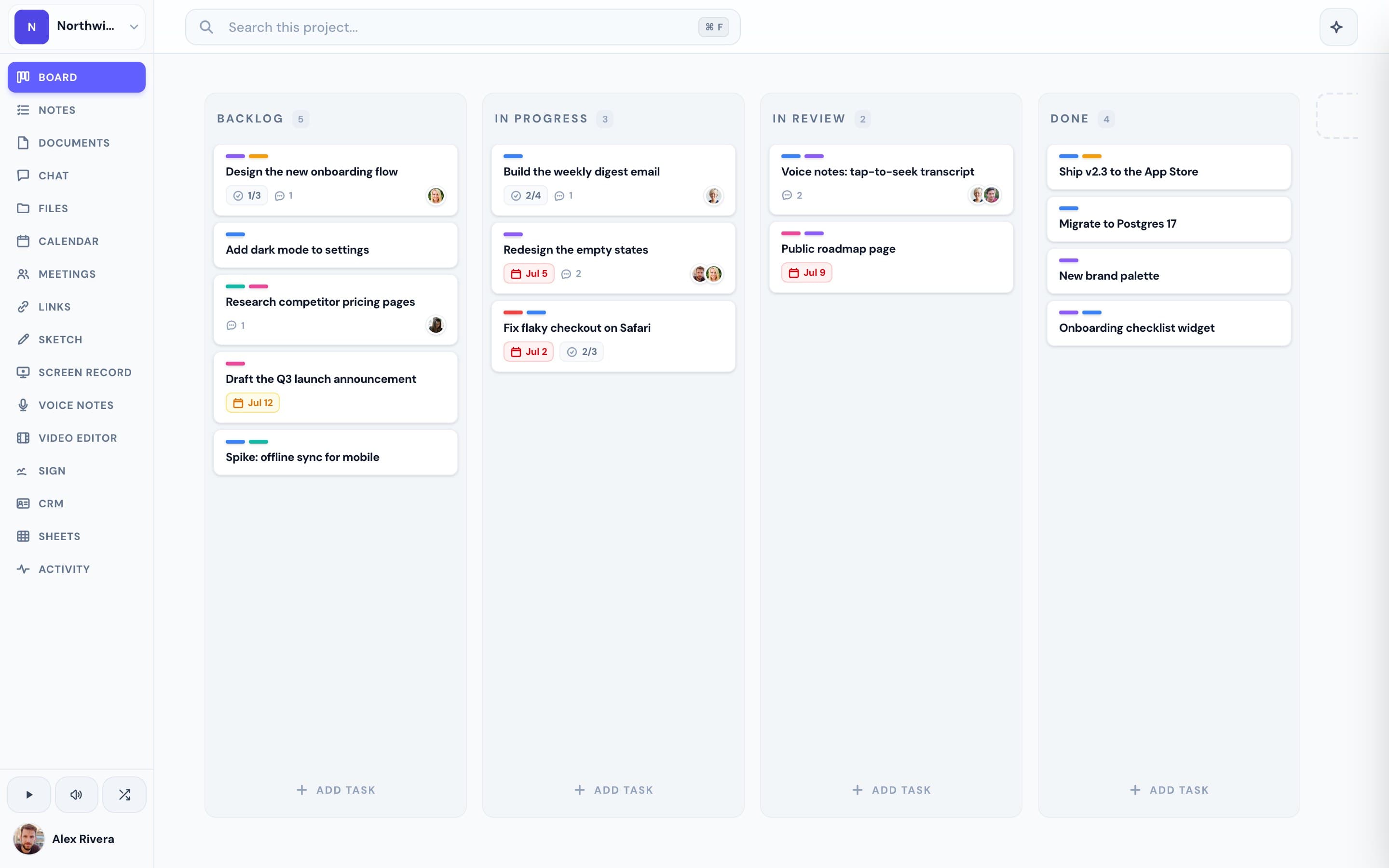
As a solopreneur, every client is one Progress project: the board for the work, docs for proposals and briefs, a booking page so clients grab time without email back-and-forth, e-signature for the agreement, and meetings — with AI notes — that clients join from a plain link, no account needed. You look at one board and one calendar to know what's actually going on, instead of planning a day around tasks pulled from tools that don't know about the client, the contract, or the call.
Switching from Sunsama
There's no importer, and honestly you may not need one — Sunsama doesn't hold your actual project data, so there's little to migrate out of it. The real move is starting your next client project directly in Progress instead of a task tool, which takes a couple of minutes. If you do want help bringing over docs or boards from whatever Sunsama was pulling tasks from, message us through in-app support and we'll help by hand — it's free during the open beta either way.
Common questions
Is Progress trying to be a daily planner like Sunsama?
Not exactly. Sunsama's whole design is a calm daily ritual layered on top of the tools where your work already lives. Progress is where the work lives in the first place — the board, docs, files, and client-facing pieces. You can still plan your day by looking at your Progress board and calendar together; you just won't get Sunsama's dedicated daily-planning ritual and time-boxing UI.
Does Progress pull in tasks from other apps the way Sunsama does?
No — Progress doesn't have Sunsama's integration layer for pulling tasks from Asana, Trello, ClickUp, Todoist, or similar tools. That's by design: the idea is that your tasks, docs, and client work live in Progress directly, so there's nothing to pull in from elsewhere.
Can I use Progress and Sunsama together?
You can, and some solopreneurs may want to for a while — Sunsama would just be planning around a single source (Progress) instead of several. But most of what Sunsama adds on top (time-boxing, streaks, daily shutdown ritual) isn't something Progress replicates, so you'd be paying for Sunsama's ritual layer while Progress separately handles where the actual client work lives.
What does Progress cost?
Progress is free during the open beta. Pricing will be introduced later, and beta users will hear about it first.
Head-to-head comparisons
More guides