
What Basecamp does well
Basecamp popularized the idea of one calm place for a project — to-dos, message boards, docs, and a shared schedule, wrapped in flat, predictable pricing and almost no learning curve. For teams tired of over-built software, that restraint is the whole appeal, and Basecamp delivers it better than almost anyone.
Where Basecamp gets stretched for agencies
The board is really just to-do lists
Basecamp's Card Table is the closest thing to a kanban board, but it's a bolt-on view, not the core of how work gets tracked — no milestones, no burndown, no due-date views tied to it. Teams that think in a real board end up fighting the to-do-list default underneath.
Client scheduling and signing still live elsewhere
Basecamp has no booking page and no e-signature. Onboarding a new client still means opening Calendly to find a time and DocuSign to get the SOW signed, then pasting the results back into a Basecamp message — two extra tools before the project even starts.
Calls happen outside the workspace
There's no built-in video calling. Kickoffs and client reviews happen in Zoom or Meet, and whatever gets decided has to be typed up by hand into a Basecamp message board afterward, if anyone remembers to.
| Progress | Basecamp | |
|---|---|---|
| Task tracking | First-class kanban board with milestones + burndown | To-do lists + optional Card Table view |
| Client booking pages | Built in, Google Calendar-backed | Not offered — use Calendly or similar |
| E-signatures | Built in | Not offered — use DocuSign or similar |
| Video meetings + AI notes | Built in — guests join from a link, no account | Not offered — use Zoom/Meet + a notetaker |
| Docs, chat, files, calendar | Built into every project | Built in (Docs, Campfire chat, schedule) |
| Pricing today | Free during open beta | Flat per-account fee |
Why agencies pick Progress
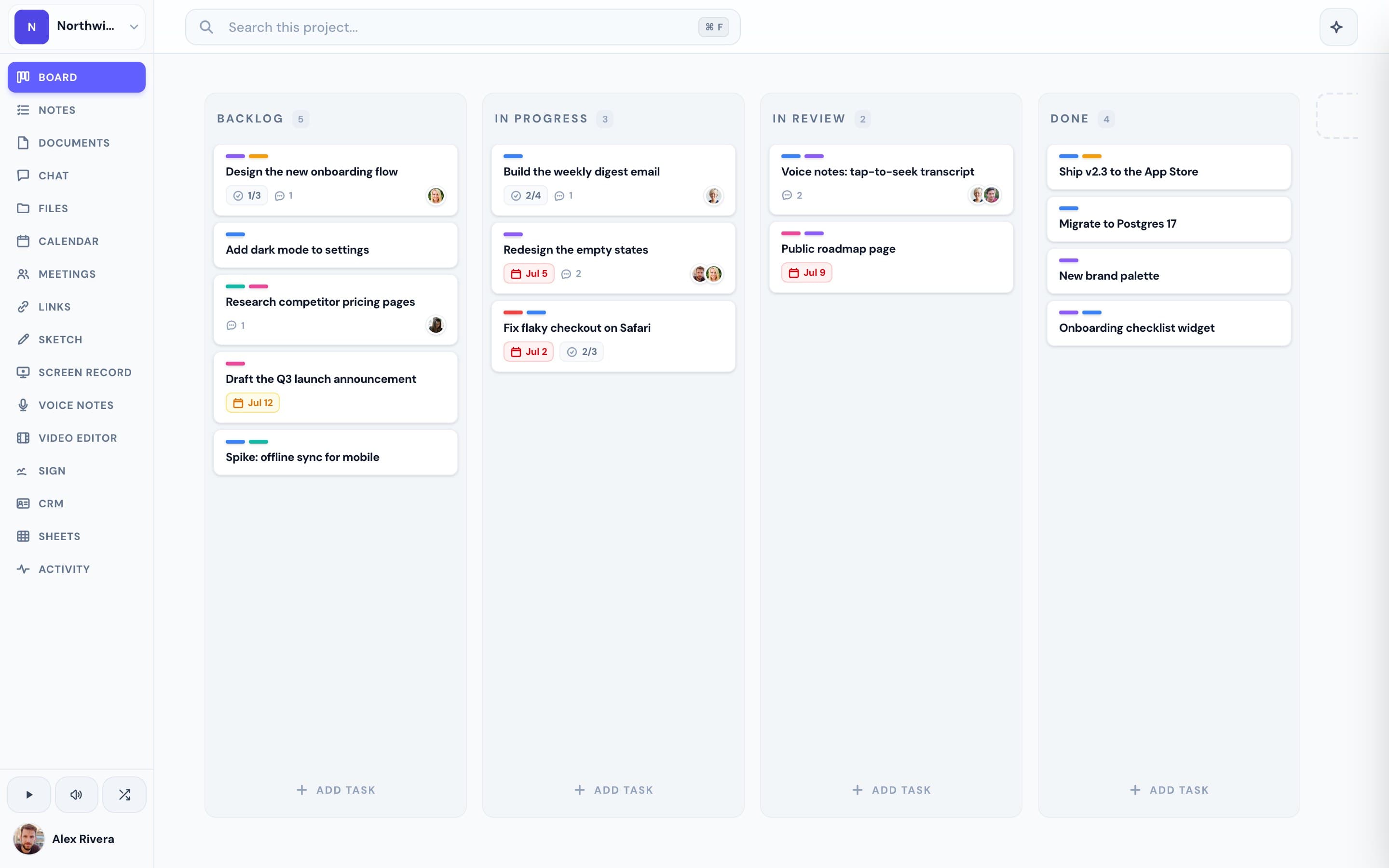
Progress keeps the thing Basecamp got right — one calm workspace per project instead of a dozen scattered tools — and fills in what agencies actually need around client work: a real kanban board with milestones, a booking page clients use to grab time on your calendar, e-signature for the SOW, and video meetings with AI notes that guests join without an account. Nothing to assemble, and nothing left over to bolt on.
Switching from Basecamp
There's no automatic importer yet, so the honest path is to start your next engagement as a fresh Progress project — it takes a few minutes to set up. If you want message boards or to-do lists carried over from an existing Basecamp project, reach out through in-app support and we'll help move the content by hand while the beta is free.
Common questions
Is Progress as simple as Basecamp?
The daily feel is close — one project, a handful of clear sections, nothing to configure before you start. Progress covers more ground overall (a real board, bookings, e-sign, meetings), but each project only shows the tabs you actually use, so a simple engagement still feels simple.
Does Progress have anything like Basecamp's Hill Charts?
No. Hill Charts are one of Basecamp's more distinctive ideas for visualizing where work stands, and Progress doesn't try to copy it — its board relies on columns, labels, due dates, and milestone/burndown views instead.
Can clients use Progress without an account?
Yes. Clients can book a call on your booking page, join a video meeting, view documents you publish, and sign agreements — all from a plain link, with no Progress account required.
What does Progress cost?
Progress is completely free during the open beta. Pricing will be introduced later, and beta users will hear about it first.
Head-to-head comparisons
More guides