
What Obsidian does well
Obsidian's local-first Markdown files are genuinely yours — no proprietary format, no lock-in, fast even with tens of thousands of notes. Its plugin ecosystem is enormous, the graph view is a real tool for surfacing connections between ideas, and for a single person building a personal knowledge base or a second brain, it's hard to beat. Progress won't out-plugin Obsidian, and it doesn't try to.
Where Obsidian gets stretched for teams
A vault isn't a shared workspace
Obsidian Sync keeps your files in step across your own devices, but it isn't real-time multiplayer editing, and there's no way to assign a task, set a due date, or see who owns what next. The moment a note needs to become a plan two or three people execute, the team reaches for a separate project tool.
Team knowledge scatters across other apps
The notes live in Obsidian, but the conversation about them happens in Slack, the deadline lives in a separate calendar, and the client call that generated half the notes happened in Zoom with nothing captured automatically back into the vault.
Clients can't be in the vault
Obsidian has no notion of a guest. If a client needs to review a doc, book time, sign something, or join a call, that work leaves Obsidian entirely and lands in three or four other logins with their own billing.
| Progress | Obsidian | |
|---|---|---|
| Markdown notes & docs | Rich docs with version history | Best-in-class local Markdown files + plugins |
| Real-time collaborative editing | Built in — everyone edits the same doc live | No — Sync keeps files in step, not live multiplayer |
| Kanban board & tasks | Built in | None natively — via community plugins or a separate tool |
| Team chat | Built-in channels + DMs | None — pair with Slack or Discord |
| Calendar | Google Calendar-synced, built in | None — pair with a separate calendar app |
| Client bookings, meetings, e-sign | Built in — guests join by link, no account | None — pair with external tools |
Why teams pick Progress
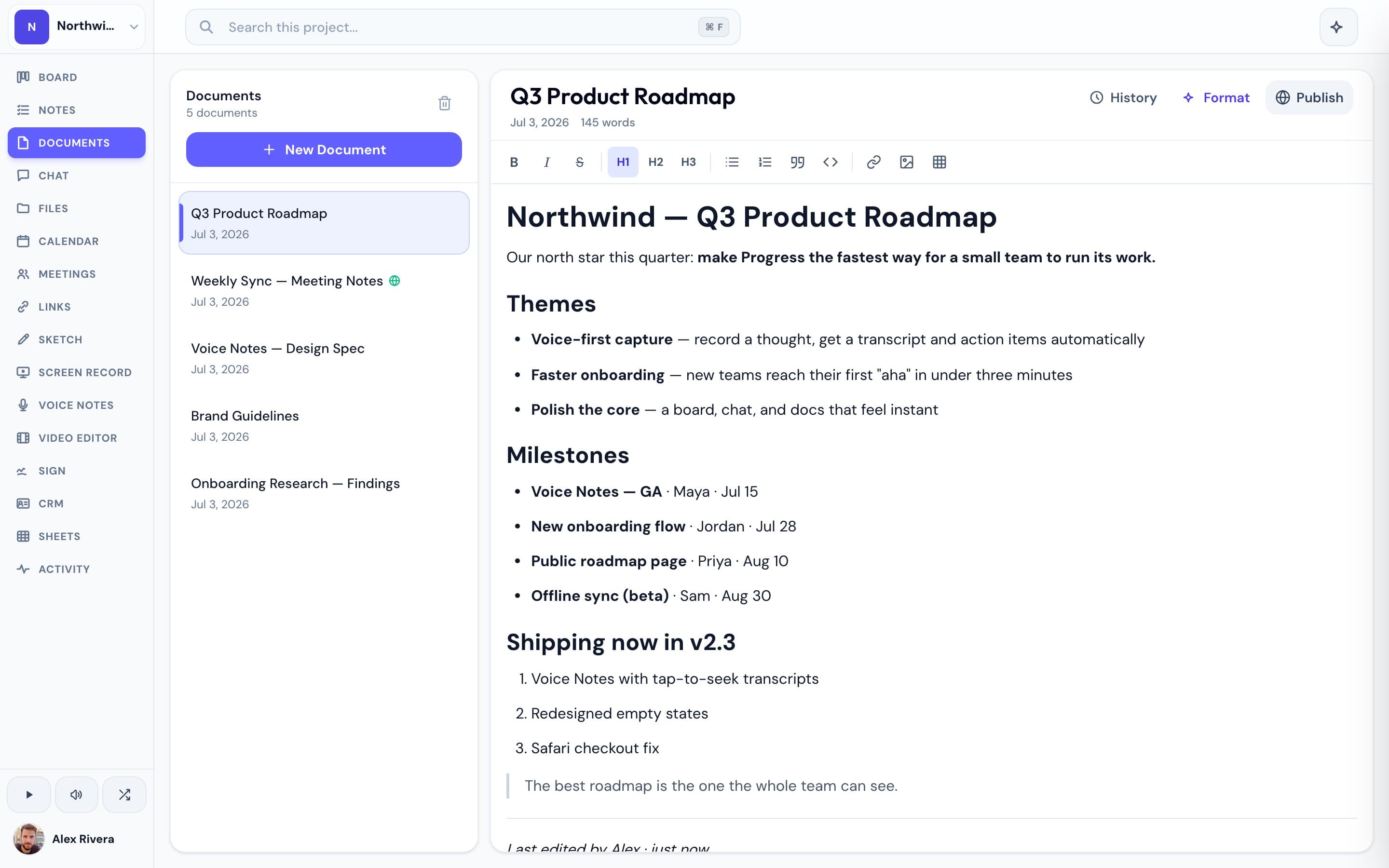
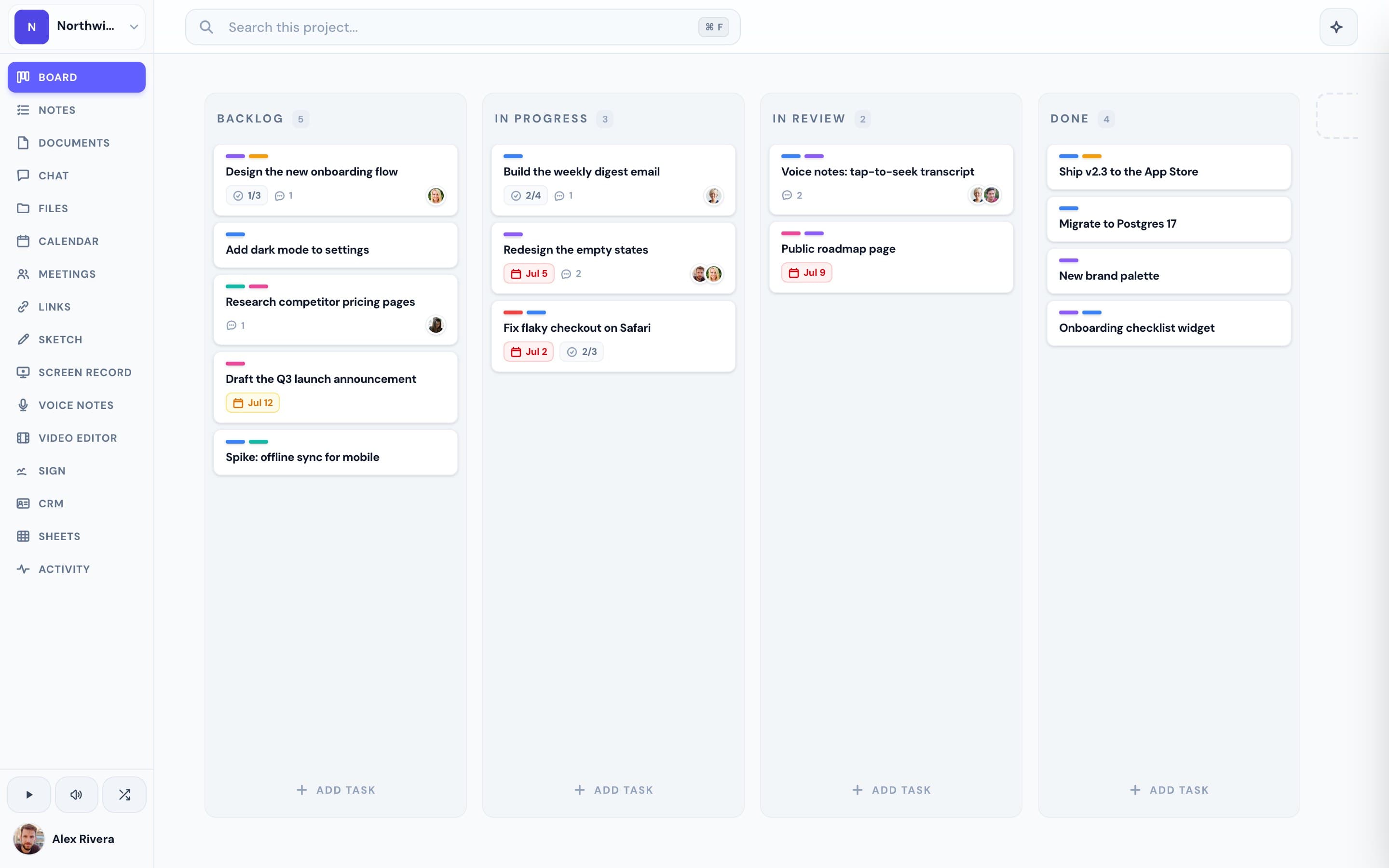
Progress gives every project a real notes surface — rich docs with version history, not a bolted-on text box — and wraps it in what a personal vault can't do: a board the team actually works from, real-time chat, a shared calendar, and a meeting room with AI notes that turn a call into action items on the same board. One workspace per project instead of a vault plus four other tabs.
Switching from Obsidian
There's no automatic importer yet. Markdown text pastes into Progress docs cleanly, so most teams start with the handful of notes that actually need to become shared work — a project brief, a client-facing doc — and leave the rest of the vault exactly where it is. Want help moving a larger set of notes over? Message us through in-app support and we'll help by hand.
Common questions
Should our team drop Obsidian entirely?
Not necessarily. Obsidian remains a strong choice for personal notes, research, and anyone who wants a local-first Markdown vault with deep plugin customization. Progress is for the notes that need to become team or client work — a project brief, a shared plan, a doc a client reviews — where real-time collaboration and the tools around the notes matter more than plugin depth.
Does Progress have anything like Obsidian's graph view or plugin ecosystem?
No. Progress docs are rich text with version history, built for a team or client to read and edit together, not a personal knowledge graph. If backlinks, community plugins, or a graph view are core to how you think, Obsidian still does that better than Progress or any team tool.
Can I import my Obsidian vault into Progress?
There's no dedicated importer today. Markdown text pastes into Progress docs cleanly, so moving over individual notes is quick. For a larger vault, contact us through in-app support and we'll help move it over by hand.
What does Progress cost?
Progress is free during the open beta. Pricing will be introduced later, and beta users will hear about it first.
Head-to-head comparisons
More guides