
What Todoist does well
Todoist earns its following. Adding a task takes seconds thanks to natural-language parsing ("every Monday at 9am"), the apps are fast and available everywhere, and features like filters, labels, and Karma give personal productivity systems real teeth. For one person managing their own life and errands, it's hard to beat.
Where Todoist gets stretched for people outgrowing a to-do app
Tasks have no home once they're not just yours
A Todoist project is really a nested list. There's no board to see what stage things are at, no shared notes doc, nowhere to attach a file, and no calendar view of the actual project — just due dates. The moment work involves a team or a client, people fall back to a separate tool to hold the context the task list can't.
Collaboration is thin
Todoist supports shared projects and assigning tasks to people, but there's no real-time chat, no comment thread that feels like an actual conversation, and no meetings. Any real discussion about the work happens in Slack, email, or a call — disconnected from the task that prompted it.
Nothing to show a client
Todoist is built for individuals and small teams managing their own work, not for anything client-facing. There's no booking page, no e-signature, no way for someone outside the list to see progress. If the work involves a client at all, that's a second stack of tools from day one.
| Progress | Todoist | |
|---|---|---|
| Quick task capture | Board cards, fast to add, with checklists | Best-in-class — natural-language due dates |
| Kanban board | Built in — drag cards across stages | None — flat lists, with sections at most |
| Notes & documents | Built in, with version history | None — task descriptions only |
| Calendar | Built in, synced with Google Calendar | Due-date view only; can sync out to a calendar app |
| Team chat | Built-in channels + DMs | None — comments on individual tasks only |
| Client-facing tools (booking, e-sign, meetings) | Built in | None — not built for this |
Why people outgrowing Todoist pick Progress
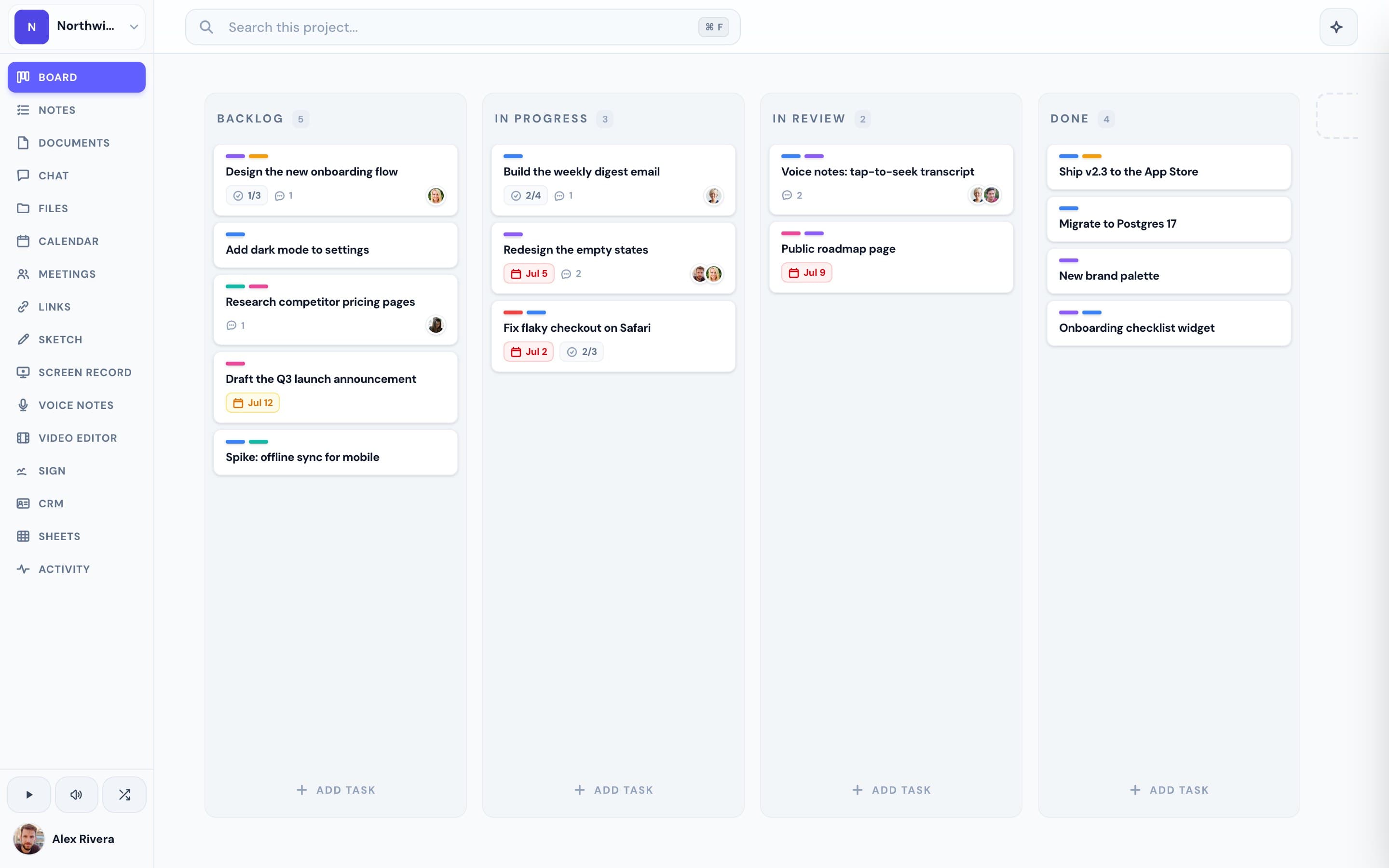
Every Progress project starts as a board, so the move from a flat task list feels natural — cards instead of line items, columns instead of due-date filters. But each card sits inside a workspace that also has notes for context, files for reference, a calendar synced to Google, and real-time chat — plus, when the work touches a client, booking pages, e-signature, and video meetings with AI notes. You don't lose the speed of adding a task; you gain everywhere that task needs to live once it's part of something bigger.
Switching from Todoist
There's no one-click importer yet, so the honest path is to start a project in Progress and rebuild your active task list on the board — most people find that a natural moment to prune anyway. If you've got a large project's worth of tasks to bring over, reach out through in-app support and we'll help move them by hand.
Common questions
Is Progress a good replacement for personal task management?
Not really its strength. Todoist is tuned for fast, personal task capture — natural-language dates, filters, labels, recurring tasks — and it's genuinely great at that. Progress is built around projects with a team or client attached. If all you need is a personal to-do list, Todoist is still the better tool for that job.
Can I use Progress and Todoist together?
Some people do — Todoist for personal errands and daily life, Progress for the project work that involves other people. There's no integration between the two today, so tasks don't sync automatically between them.
Does Progress have natural-language due dates or deep recurrence rules?
Board cards in Progress support due dates, but Progress doesn't have Todoist's natural-language parsing ('every weekday except holidays') or the same depth of recurrence options. If that's central to how you capture tasks, it's worth knowing going in.
What does Progress cost?
Progress is free during the open beta. Pricing hasn't been introduced yet, and beta users will hear about it first when it is.
Head-to-head comparisons
More guides