
What Coda does brilliantly
Coda's core idea holds up well for teams with the appetite to build: a doc that runs as an app. Tables behave like real databases with views and a genuine formula language, buttons trigger actions, and automations fire on their own. With 600+ Packs, a team can wire a Coda doc into dozens of other systems. Now part of the Superhuman suite alongside Grammarly, it's a mature, capable platform. A team with someone willing to climb the formula learning curve can produce trackers, wikis, and lightweight internal tools no rigid app template could match.
Where Coda gets stretched for teams
Somebody has to build it
Coda's power comes from assembly, and assembly is a job. Someone on the team ends up as the de facto workspace architect — writing formulas, wiring Packs, maintaining views — while everyone else waits for the doc to catch up with how the team actually works.
The rest of the team's day lives outside the doc
Coda is a documents surface. Scheduling a call still means a separate booking tool, a signed agreement still means DocuSign or similar, and the video call still means Zoom or Meet plus a bolted-on notetaker. None of it shows up next to the doc it belongs to.
Seats scale with who's allowed to build
Coda's per-Doc-Maker pricing means every teammate who needs to create or edit docs needs a paid seat. As a team grows past its first few builders, seat math becomes its own small project, and free-plan sharing limits tend to bite right when a doc goes team-wide.
| Progress | Coda | |
|---|---|---|
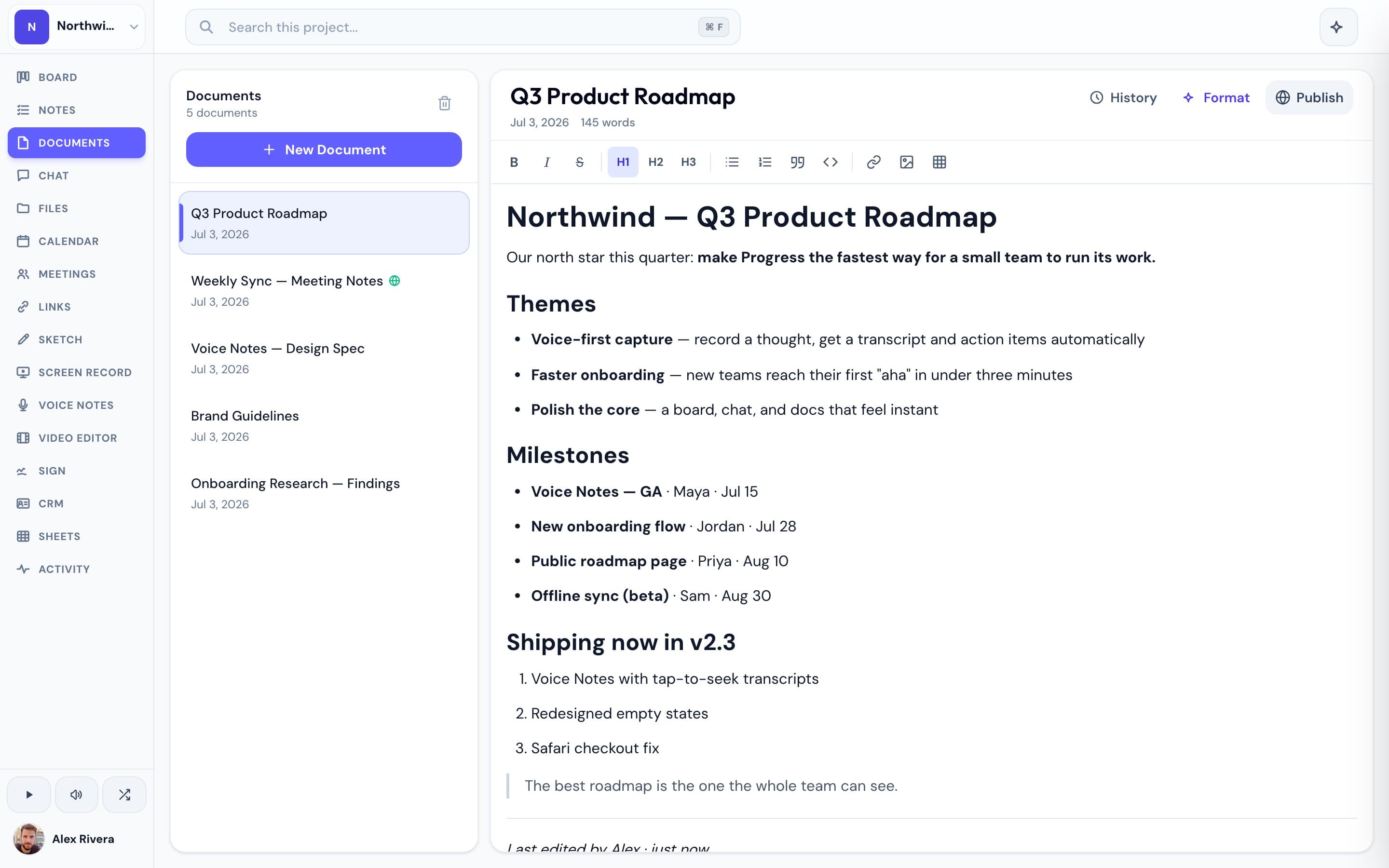
| Rich documents | Yes — rich editor, version history, PDF export, one-click publish | Yes — powerful doc-as-app editor |
| Docs as apps (formulas, buttons, automations, Packs) | No — docs stay simple on purpose | Yes — best in class, 600+ Packs |
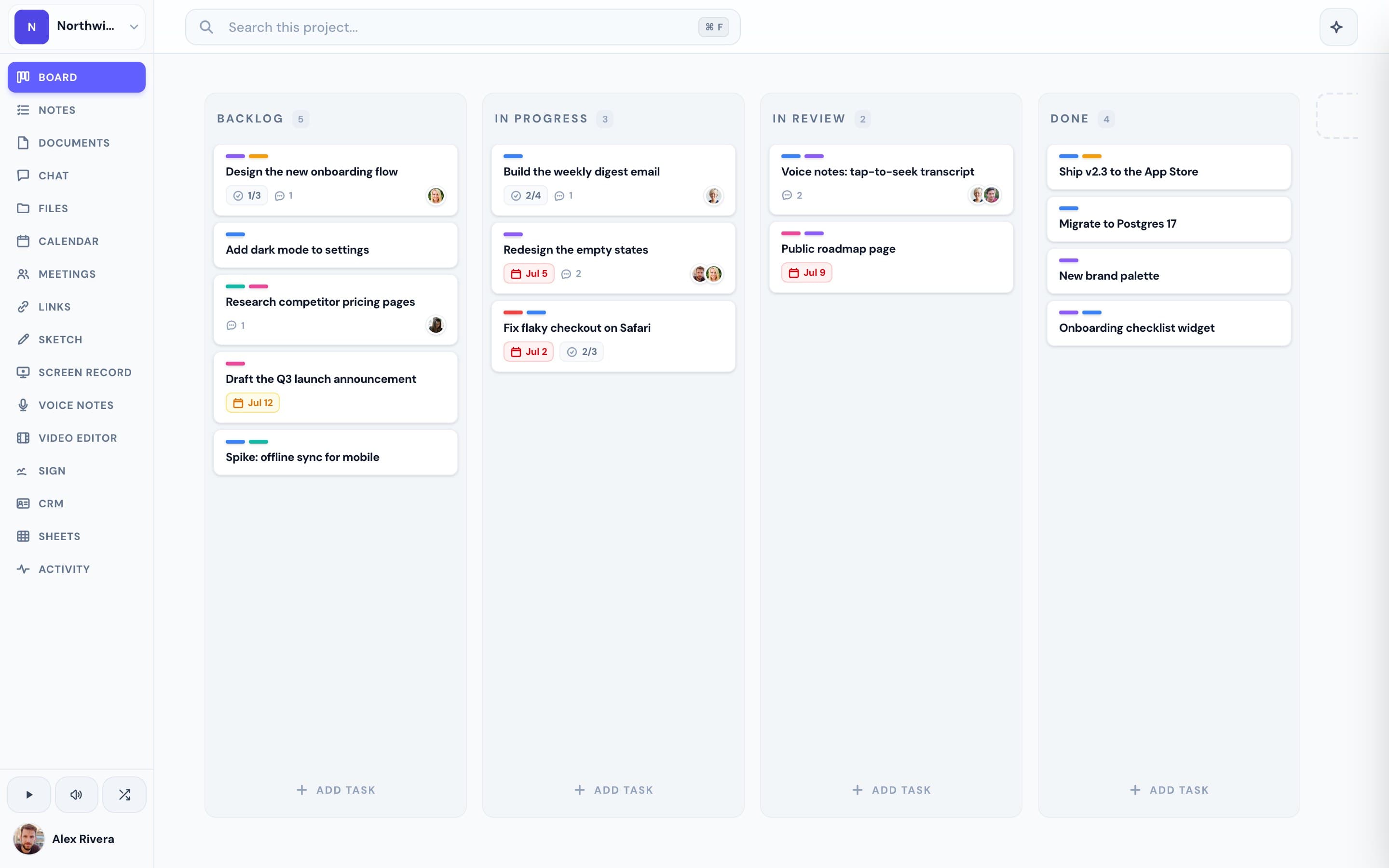
| Kanban board | Built in, linked to the project | Buildable from tables — you design it |
| Team chat + video meetings with AI notes | Built in — channels, DMs, and guest meetings with AI notes | No — external tools (chat app, Zoom, a notetaker) |
| E-signatures + client booking pages | Built in | No — external tools (DocuSign, Calendly) |
| Pricing model | Free during the open beta | Per-Doc-Maker seat pricing |
Why teams pick Progress instead
Every project in Progress starts assembled: a kanban board for the work, docs for briefs and specs, team chat for the day-to-day, a Google Calendar-synced calendar, video meetings with AI notes, and e-signatures — all in the same workspace from day one. There's no formula language to learn and no builder role to staff. A new project goes from created to working without anyone wiring it together first.
Switching from Coda
There's no automated importer yet, so moving off Coda means bringing your docs over by hand — copy the content in, and our in-app support can help with anything that doesn't transfer cleanly. Progress is free during the open beta, so the simplest way to evaluate it is to run one real project in it alongside what you already have in Coda.
Common questions
Is Progress a replacement for Coda's doc-as-app features?
No. If your team relies on Coda's formulas, buttons, automations, or Packs to run custom internal tools, Progress doesn't replicate that — our docs are intentionally simpler. Progress replaces Coda for teams who mainly use it to track projects and share information with each other and with clients, not to build custom software inside a doc.
Does Progress have an importer for Coda docs?
Not yet. Moving content over today means copying it in by hand. Reach out through in-app support and we'll help with anything that doesn't transfer cleanly.
Can clients or guests use Progress without being added as a paid seat?
Yes. Clients can view a published document, book time on your calendar, join a video meeting, and sign a document — all from a link, with no account and no seat required.
What does Progress cost?
Progress is completely free during the open beta. Pricing will be introduced later, and beta users will hear about it first.
Head-to-head comparisons
More guides