
What Notion does well
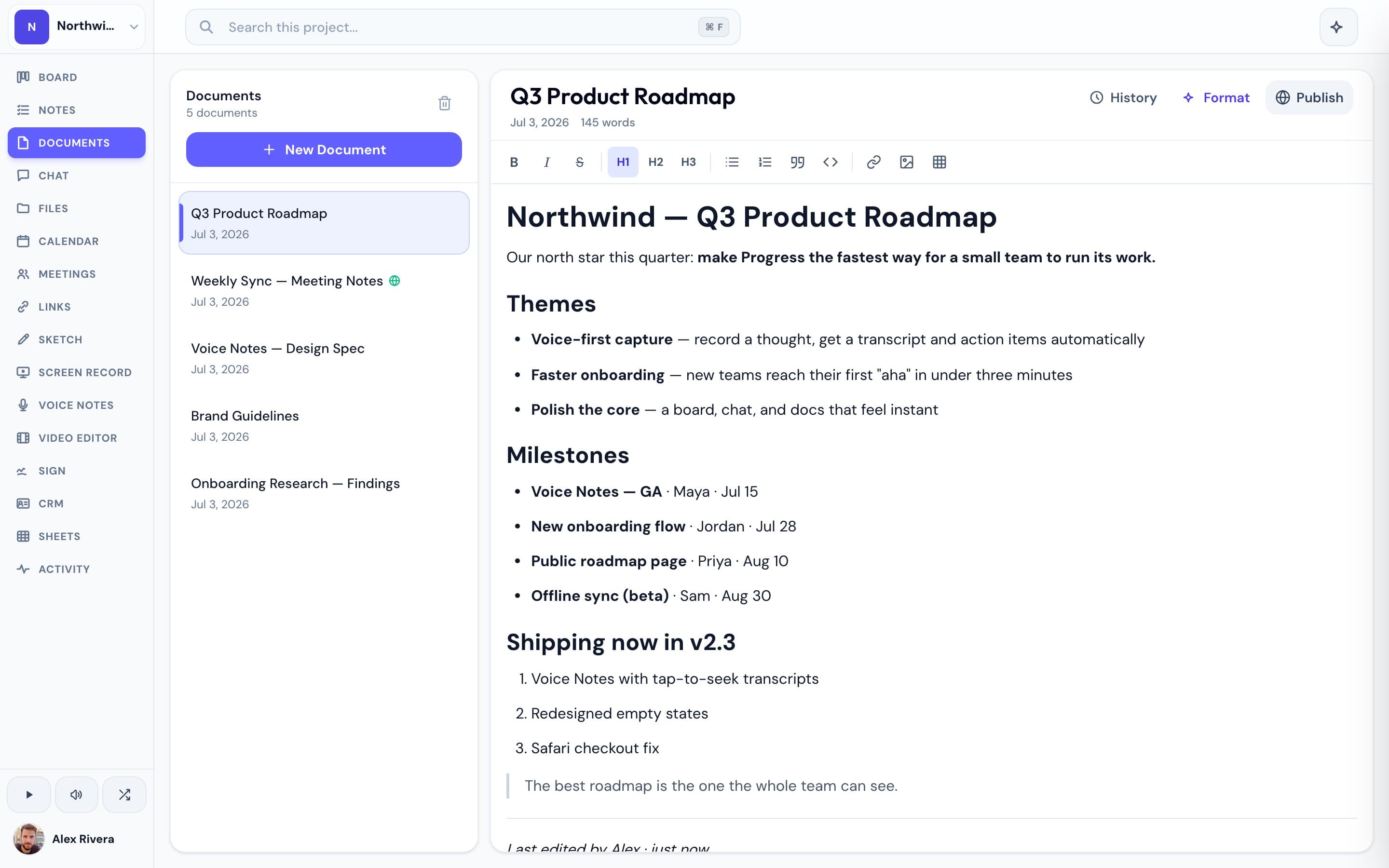
Notion is an exceptional flexible canvas — docs, wikis, and databases you can shape into almost anything, with a huge template ecosystem and a polished writing experience. As a team brain and internal knowledge base, it's hard to beat.
Where Notion gets stretched for client-facing teams
Client work isn't a wiki
A client engagement has a lifecycle — inquiry, call, proposal, agreement, kickoff, delivery. Notion can document every stage beautifully, but it can't run them: no booking page, no signatures, no meetings. The lifecycle happens in four other tabs.
The blank-canvas tax
Every Notion workspace is a bespoke system someone had to design and now has to maintain. Templates help, but the flexibility that makes Notion great for wikis means client-project structure is always something you built, not something you got.
Sharing gets awkward at the edges
Public Notion pages are great for docs, but granting a client real access means guest invites and permission juggling — and there's still no way for them to book you, sign, or join a call from inside the workspace.
| Progress | Notion | |
|---|---|---|
| Docs & notes | Built-in rich docs with version history | Best-in-class docs & databases |
| Client booking page | Built in | None — use Calendly etc. |
| E-signatures | Built in | None — use DocuSign etc. |
| Video meetings + AI notes | Built in, guests join by link | None — use Zoom/Meet + notetaker |
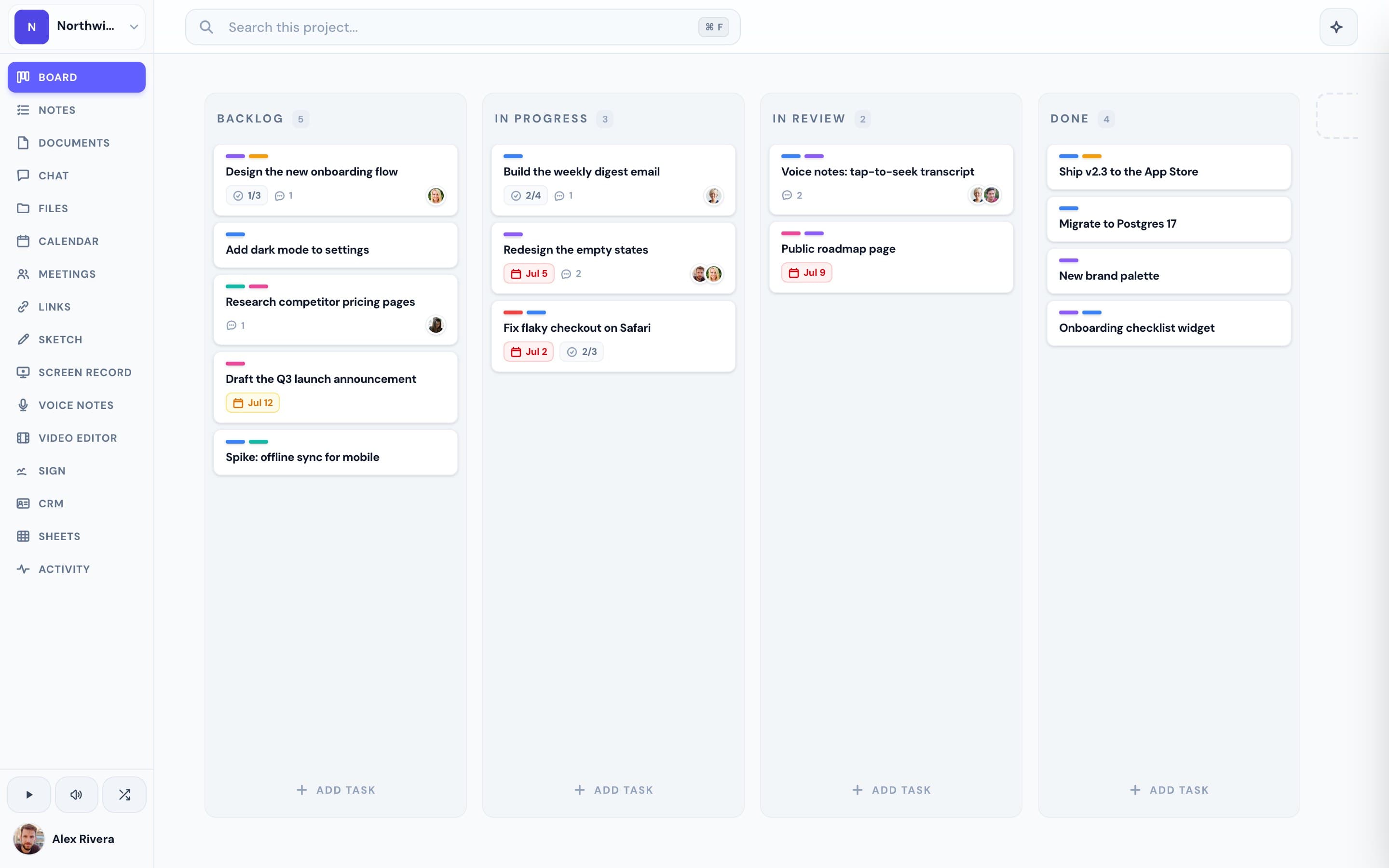
| Kanban + chat + calendar | Built into every project | Boards via databases; no real-time chat |
| Structure | Opinionated, ready on day one | You design it |
Why client-facing teams pick Progress
In Progress, 'the client project' is a real thing the software understands: one workspace holding the board, the docs, the files, the meeting room, the booking page, and the signature flow for that engagement. Nothing to assemble, and the client-facing pieces are first-class — clients book, join, and sign without accounts.
Switching from Notion
Most teams don't rip out Notion — they move client projects into Progress and keep Notion as the internal wiki. Progress is free during the open beta, so try one live engagement in it; if you want help carrying content over, message us through in-app support and we'll help by hand.
Common questions
Should we replace Notion entirely?
Not necessarily. Notion is excellent as an internal knowledge base. Progress replaces the pile of client-work tools around it — scheduling, signatures, meetings, project boards — and many teams run both, with Progress owning everything client-facing.
Do clients need a Progress account?
No. Booking a call, joining a meeting, viewing a published doc, and signing a document all work from a plain link with no account.
Does Progress have AI like Notion AI?
Yes — a project-scoped assistant called Scout that can answer questions about the project and take actions like creating cards and drafting docs, plus automatic AI meeting notes with action items.
Is Progress free?
Completely free during the open beta. Pricing comes later, announced to beta users first.
Head-to-head comparisons
More guides