
| Progress | Linear | |
|---|---|---|
| Built for | Cross-functional project teams | Software engineering (cycles, issues) |
| Workflow fit | Neutral board fits any workflow | Non-eng teams adapt to its model |
| Scope | Board, chat, recordings, e-sign, booking included | Issues + docs / projects |
| Client / stakeholder work | Shareable workspace + public booking pages | Internal engineering tool |
| AI | Project-aware, knows your whole project | AI agents for issue workflows |
| Pricing | Free during open beta | Per-seat |
What Linear does well
Linear is fast, keyboard-driven, and beautifully designed for software teams — cycles, issues, triage, and roadmaps that make engineering planning feel effortless.
Where Progress is different
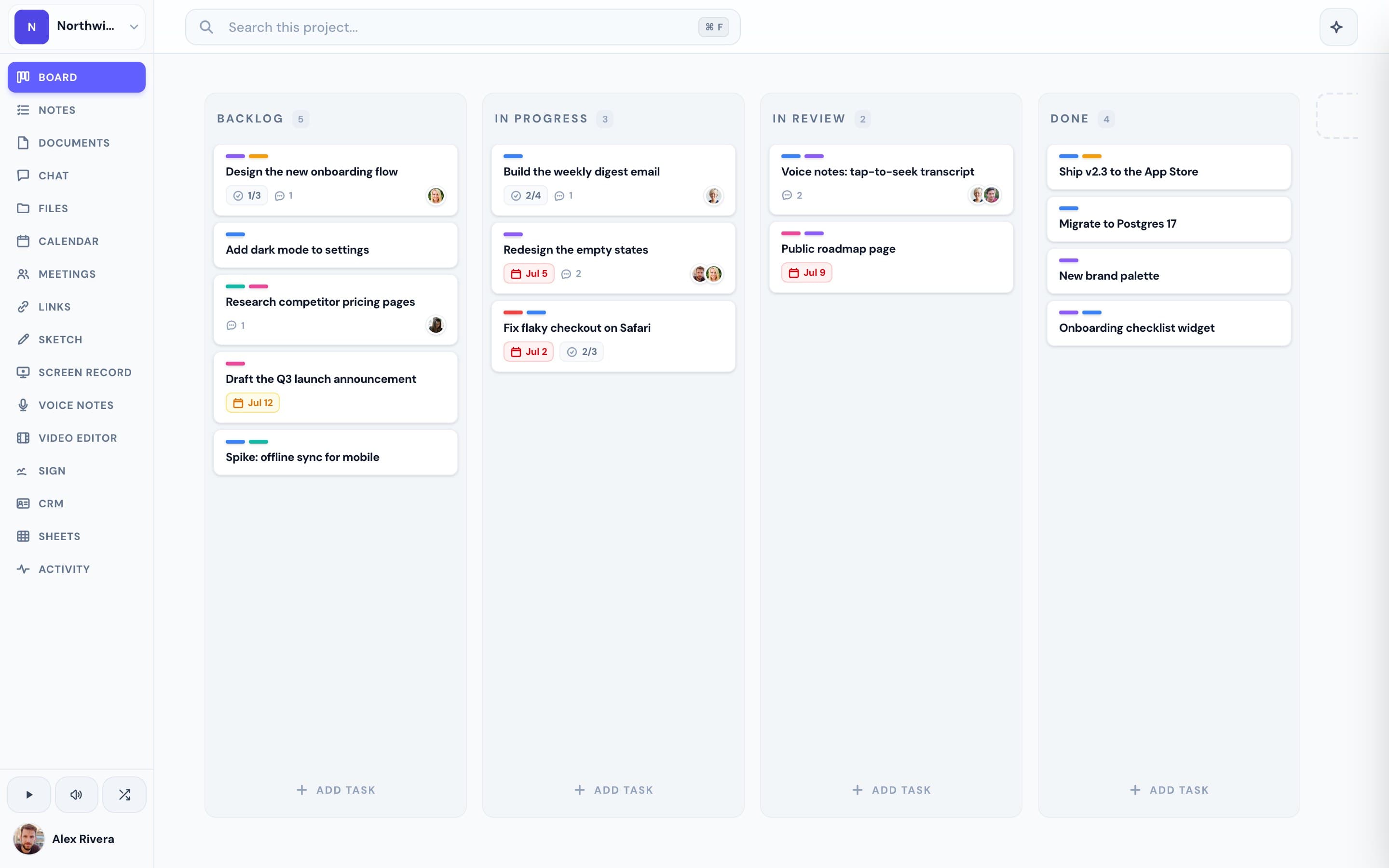
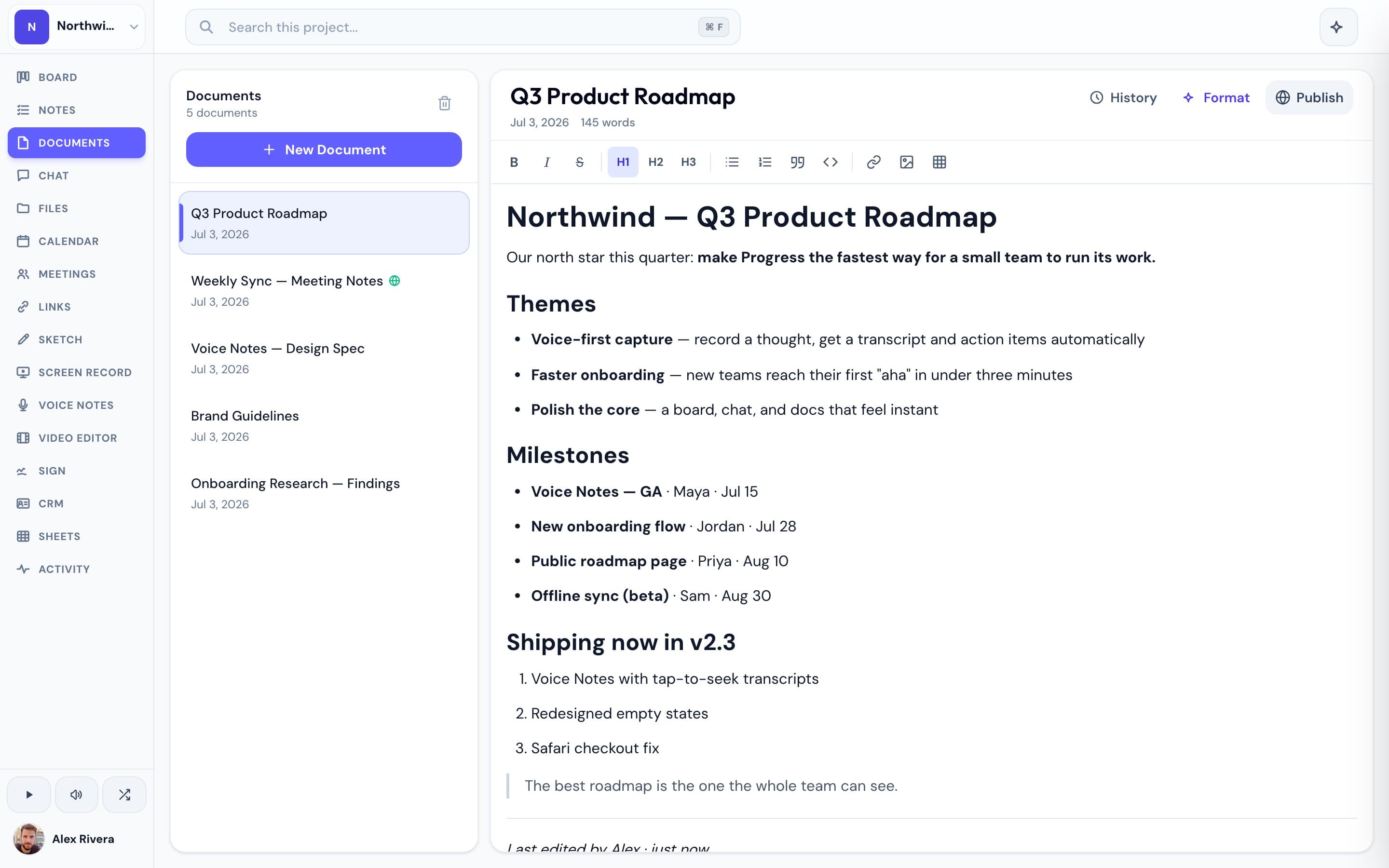
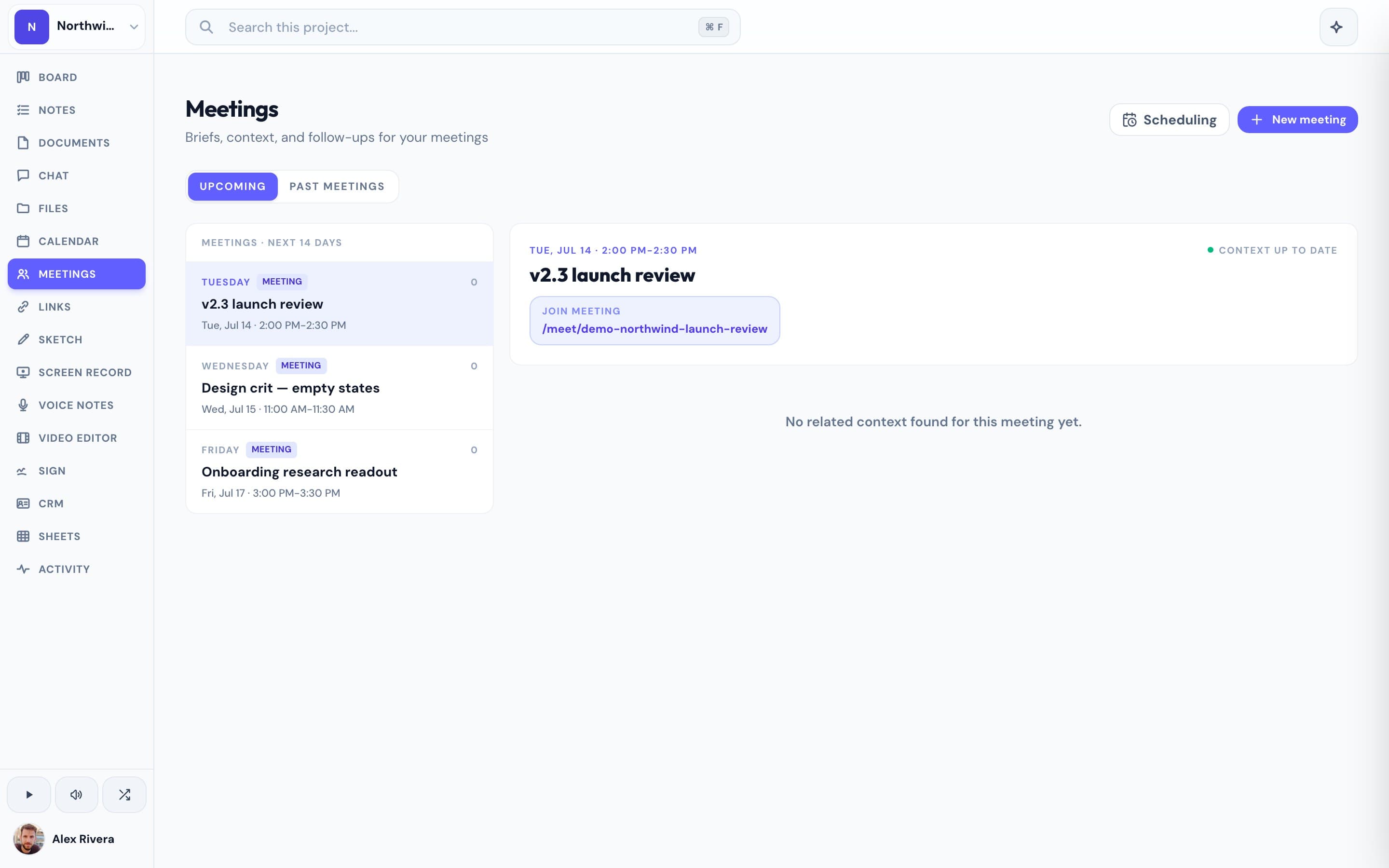
Linear's model is built around shipping code, so its language and views can resist anyone outside engineering. Progress uses a neutral kanban board that fits any workflow, and surrounds it with chat, notes, a calendar, recordings, e-signatures, and public booking pages — so designers, marketers, and clients share one workspace.
This is the real thing
Actual screenshots from a live Progress workspace — not mockups. Every project ships with all of it.
Looking for a Linear alternative?
If Linear is perfect for your engineers but the rest of the team needs more than issue tracking, Progress is an alternative that brings everyone into one workspace per project — board, chat, docs, and meetings together.
More project management comparisons