
What you get
- A kanban board for your own to-dos and side projects
- Rich notes and documents, version-tracked, right next to the tasks they describe
- A calendar synced to Google Calendar in the same workspace
- Voice notes you can record and dictate on the go, transcribed automatically
- A project-aware AI assistant that can see your board and notes and act on them
- Files and a sketch canvas for anything that doesn't fit a to-do list
The usual setup, and where it breaks down
Your tasks and your notes don't know about each other
The to-do lives in one app, the notes that explain it live in another, and there's no link between them. Figuring out why a task exists means remembering which app you wrote the context in, then finding it.
The calendar is just a grid
A standalone calendar app shows you when things happen, but not what they connect to. It doesn't know about the task the meeting is for or the notes you took last time, so you end up cross-referencing three apps to get ready for one event.
The AI assistant lives in its own tab
General chatbots are useful, but they don't know what's on your to-do list or what you wrote yesterday unless you copy and paste it in. Every real question about your own life starts with re-explaining your life to it.
| Progress | The usual stack | |
|---|---|---|
| Tasks & to-dos | Kanban board built into your project | A dedicated to-do app (Todoist, Things) |
| Notes & docs | Rich notes with version history, same workspace | A separate notes app (Notion, Apple Notes) |
| Calendar | Google Calendar-synced, same workspace | The calendar app on its own, disconnected from tasks |
| Voice notes | Built-in recorder with automatic transcription | A separate voice memo app |
| AI assistant | Project-aware, already sees your board and notes | A general chatbot with no access to your tasks |
| Logins & subscriptions | One workspace | One per app, rarely talking to each other |
One project instead of five apps
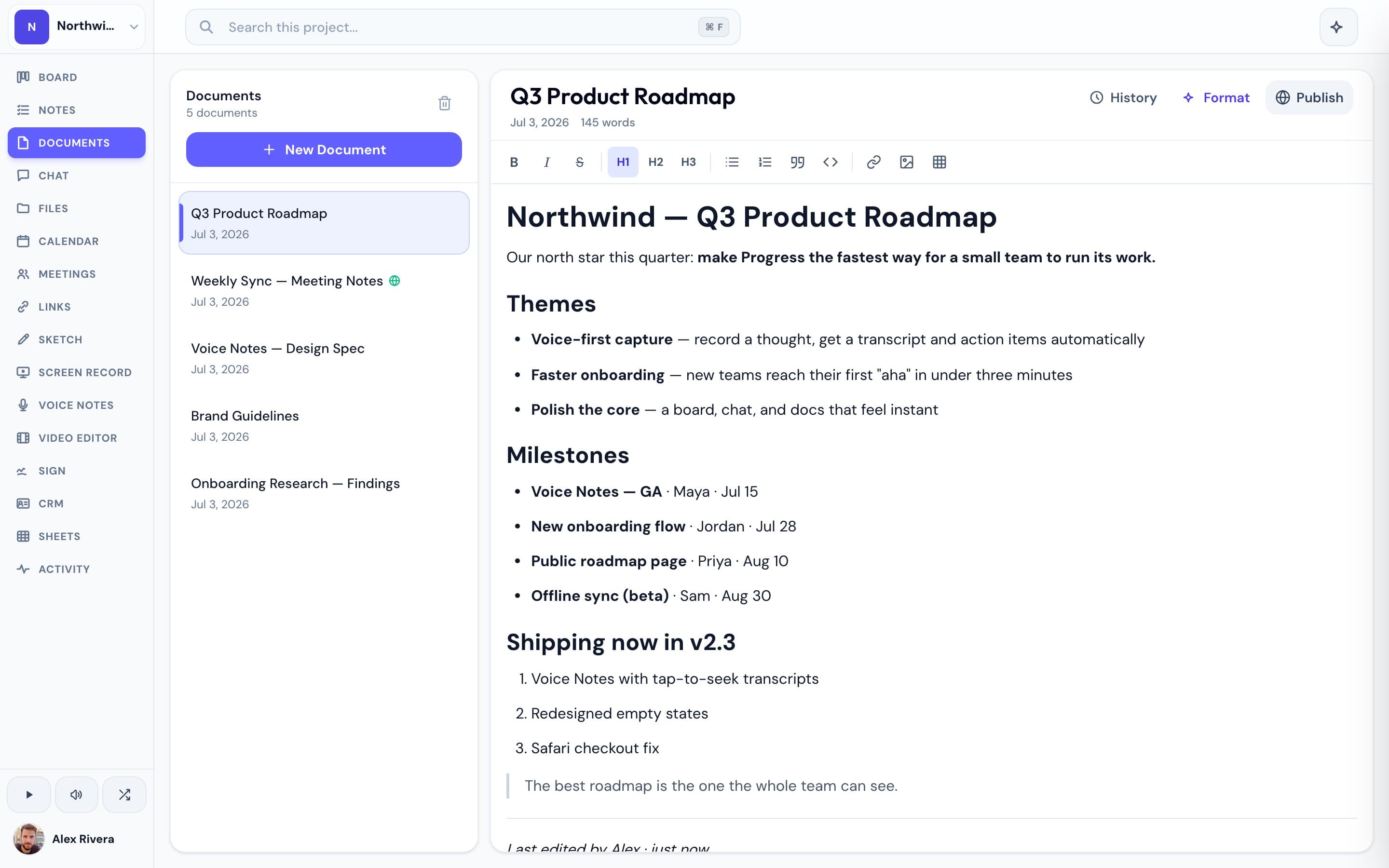
Create a single Progress project for yourself and it becomes the whole toolkit: a board for tasks, notes and documents for anything you're writing or planning, a calendar for your schedule, and voice notes for capturing something while you're away from a keyboard. It's one login and one place to look, not five apps with five separate histories of your own life.
An assistant that already has the context
Because the AI assistant is scoped to your project, it can see the cards on your board and the notes you've written without you pasting anything in first. Ask it to draft a note, add a task, or summarize what's on your plate this week, and it's working from what's actually there — not a blank chat window.
Built for one person just as easily as a team
Progress wasn't stripped down for solo use — it's the same product, used by one person. That means version history on your notes, a real calendar sync, and a proper kanban board, not a lightweight personal tier missing the features that make the team version worth using.
Common questions
Isn't Progress built for teams? Will it feel like overkill for just me?
The core unit in Progress is a project, not a team — you can create one for yourself and never invite anyone. You get the board, notes, calendar, voice notes, and AI assistant either way; nothing forces you into team features you don't need.
Does this replace my to-do app and my notes app?
For most personal setups, yes. The board covers task management and the notes tool covers docs and journaling, and because they're in the same project, a note can reference the card it explains instead of living in a separate app with no link between them.
Can I move my existing notes and tasks over?
There's no automated importer yet. You can paste content into notes and rebuild your board manually, and if you have a larger existing setup you want help with, our in-app support can walk through it with you.
What does it cost?
Progress is free during the open beta. There's no tier to pick and nothing to configure to unlock the personal-use features described here.
Features that make it work
Compare
More use cases