
What you get
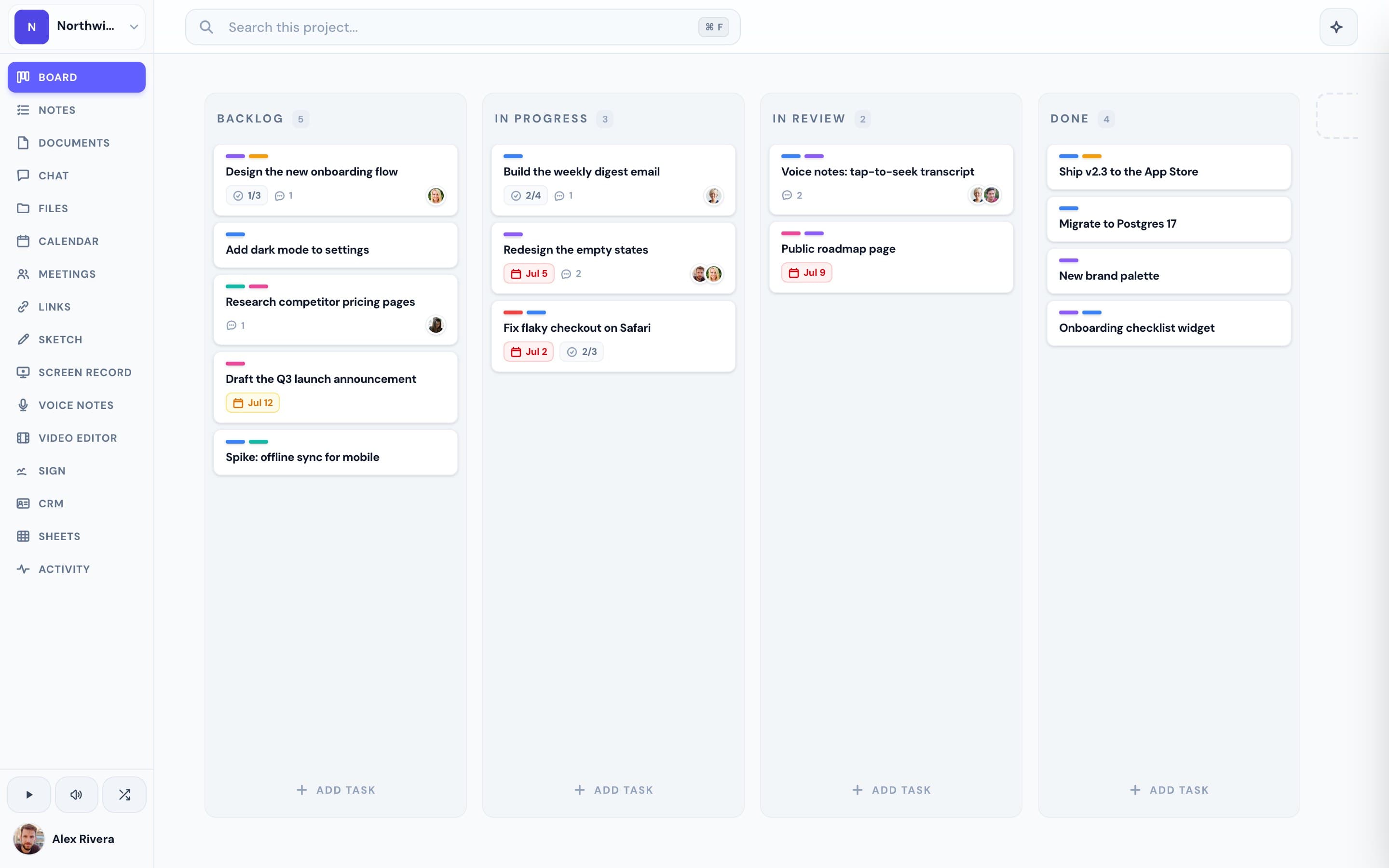
- A kanban board for the project's phases and tasks, with due dates, checklists, and labels
- Notes and Documents next to the board, with version history, so vendor details and measurements don't get lost
- A calendar synced to Google Calendar for appointments, deliveries, and deadlines
- Files for quotes, photos, permits, and contracts, kept with the rest of the project
- A booking page if a contractor, planner, or freelancer needs to grab time on your calendar
- Free during the open beta
The usual setup, and where it breaks down
Your plan is scattered across five apps
Tasks in a to-do app, notes in Apple Notes, dates in your phone calendar, files in a Drive folder, vendor texts in Messages. None of it talks to the others, so keeping a renovation or a wedding on track means checking five places instead of one.
Team tools weren't built for you
Asana, Monday, and ClickUp assume a company: roles, permissions, billing seats. For a personal project, it's just you (and maybe a partner) tracking a budget and a timeline, not managing a department.
Coordinating with outside help is clunky
A contractor, a wedding planner, a freelance designer — anyone helping you needs a call scheduled, a file shared, or a quick update, and that usually means layering on yet another tool just for them.
| Progress | The usual stack | |
|---|---|---|
| Tasks & timeline | Kanban board with columns, due dates, checklists | A to-do app or a standalone Trello board, disconnected from everything else |
| Notes & files | Notes (with version history) and Files in the same project | A notes app plus a separate Google Drive folder |
| Calendar | Synced to Google Calendar automatically | A separate calendar you update by hand |
| Scheduling with contractors or vendors | Built-in booking page tied to your calendar | Calendly, or back-and-forth texts to find a time |
| Calls with vendors or planners | Meetings with a plain join link and AI notes | Zoom plus a separate notetaker app |
| Cost | Free during the open beta | Several subscriptions across separate apps |
Sized for one project, not an org chart
Progress doesn't ask you to set up teams, roles, or departments. Create a project and you get a board, notes, a calendar, files, and the rest of the workspace scoped to that one thing — a kitchen remodel, a wedding, a novel you're finally writing. Everything you add stays inside that project, instead of spreading across a personal notes app that also has your work notes in it.
Bring in the people helping you, without a new tool
If a contractor, planner, or freelancer needs time with you, they can book straight off your Google Calendar through a booking page — no separate scheduling account for either of you. If you need a call, Meetings gives them a plain link to join, no download and no account required, plus AI meeting notes afterward so you're not scribbling while you talk.
Everything stays in one place, including your history
Notes keep version history, so you can see what changed the week a contractor's estimate came in. Files stay attached to the project instead of buried in a Downloads folder. When the project's done, it isn't spread across five apps you'll forget to check the next time you start one.
Common questions
Is Progress overkill for a single personal project?
No. A project in Progress is just a workspace with a board, notes, calendar, and files. You don't have to set up a team or invite anyone — it works fine solo.
Do I need to invite my partner or family for it to work?
No, but you can. Progress supports inviting people into a project if you want to share the board or calendar with a partner, and it works just as well if you're the only one using it.
Can I use it for more than one personal project at once?
Yes. Each project is its own workspace, so a home renovation and a wedding can run side by side without their tasks, notes, or files mixing together.
What if I'm already tracking this in Notion or Trello?
There's no automatic importer yet, so moving over means recreating your board and notes by hand, or reaching out through in-app support for help. For a project you're just starting, it's usually easier to begin directly in Progress.
Features that make it work
Compare
More use cases