
What you get
- Break the goal into a board: cards, columns, due dates, and checklists for every step.
- Keep notes and research right next to the board, not in a separate app.
- A calendar synced to Google Calendar holds every deadline in the same project.
- Milestones and a burndown chart turn "am I on track?" into a line on a chart.
- Voice notes capture a thought on the go and transcribe it automatically.
- One project holds the whole goal: board, notes, calendar, and files together.
The usual setup, and where it breaks down
The goal lives in your head, the plan lives in five apps
The goal is clear in your mind, but the plan gets split across a notes app for the thinking, a to-do list for the tasks, a calendar for the deadlines, and a habit tracker for the streak. Nothing talks to anything else, so keeping it current becomes its own chore.
You can't tell if you're actually on track
A checklist tells you what's left, not whether you're behind. Without a way to see progress over time, most goals either get abandoned quietly or get checked on the same three days a year: New Year's, a birthday, and whenever guilt kicks in.
Personal goals don't get the structure work projects do
A client project gets a proper board, a deadline, and a plan. A personal goal, training for something, learning a skill, planning a move, usually gets a sticky note and good intentions, because setting up the same structure for yourself feels like overkill.
| Progress | The usual stack | |
|---|---|---|
| Breaking a goal into steps | A kanban board with columns, due dates, and checklists | A to-do list app, with no board view of the whole goal |
| Tracking whether you're on pace | Milestones plus a burndown chart | A gut feeling, or a spreadsheet you build and maintain yourself |
| Deadlines | A calendar synced to Google Calendar, inside the same project | A separate calendar app you cross-reference by hand |
| Notes and research | Notes and documents with version history, next to the board | A separate notes app |
| Capturing a thought on the go | Voice notes, recorded and auto-transcribed | A voice memo app you have to remember to transcribe later |
| Where it all lives | One project workspace | A to-do app, a notes app, a calendar app, and a spreadsheet, stitched together by memory |
Break the goal into a board
Open a project, pick a goal, and start a board. Columns can be as simple as Someday, This Month, Doing, and Done, or match however you actually plan. Cards carry due dates, checklists for sub-steps, labels for priority, and a comment thread if you want to leave yourself notes on why a step slipped. It's the same kanban board Progress uses for client work, just pointed at your own goal.
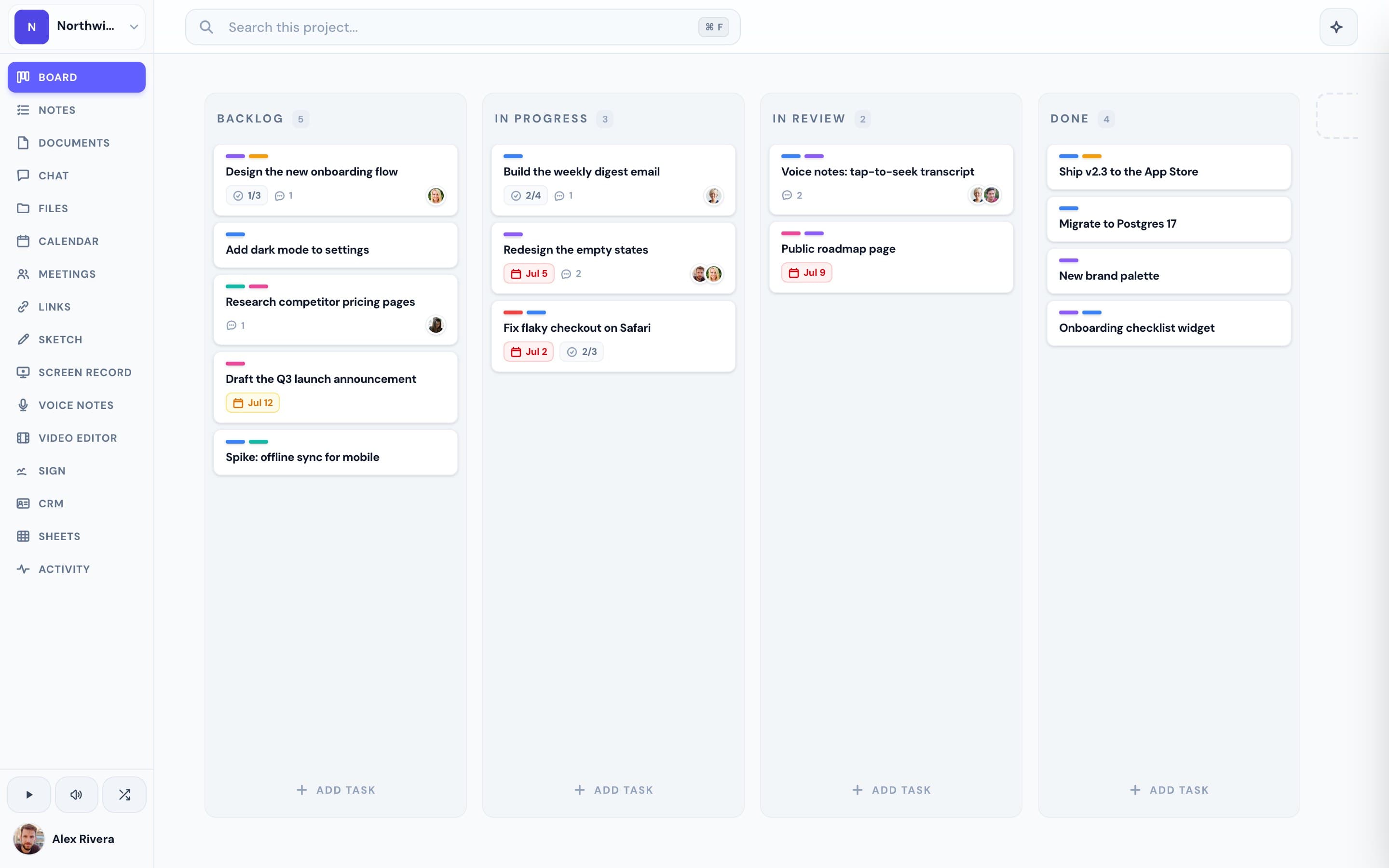
Milestones and a burndown chart make progress visible
Set milestones on the board for the checkpoints that matter: the halfway point of a training plan, the first draft of a manuscript, the closing date on a move. Progress plots a burndown chart against those milestones, so instead of guessing whether you're behind, you can look at a line.
Notes and a synced calendar keep the thinking and the deadlines together
Every project also has notes with version history, so the research, the plan, and the reasoning behind a goal live next to the board that tracks it. Deadlines go on a calendar synced to Google Calendar, so a goal's due dates show up alongside everything else on your schedule instead of living in a separate app you forget to check.
Common questions
Is Progress built for personal goals, or just work projects?
Both. A project in Progress is just a workspace, and nothing stops you from starting one for a personal goal, like training for a race or planning a move. The same board, notes, and calendar tools apply either way.
How does the burndown chart work for a personal goal?
Set milestones on your board for the checkpoints that matter, and Progress plots a burndown chart showing your remaining work against your timeline, so you can tell at a glance if you're ahead or behind.
Can I use it just for myself, or does it require inviting other people?
You can run it solo. Every feature, the board, notes, calendar, and milestones, works on a project with just you in it. Invite someone later if the goal becomes a shared one.
What does it cost?
Progress is free during the open beta.
Features that make it work
Compare
More use cases