
What you get
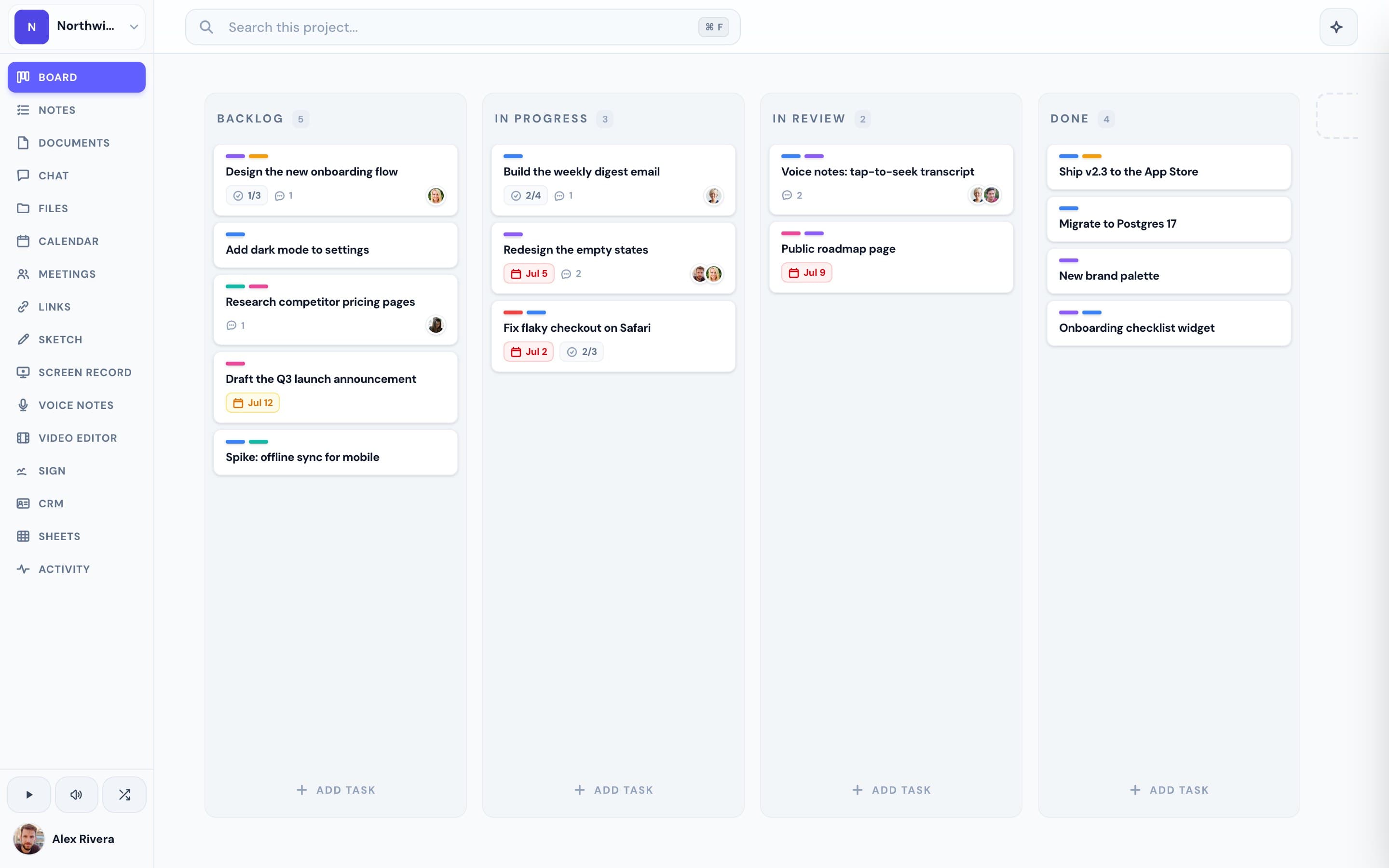
- A kanban board for each personal project
- Notes, files, and a synced calendar in the same project as the tasks
- Due dates, checklists, and labels on every task
- Quick-add a task from the iOS home-screen or lock-screen widget
- Two-way Google Calendar sync alongside your task list
- A project-aware AI assistant that already knows your notes
The usual setup, and where it breaks down
Todo apps forget why the task exists
"Call the roofer" is a checkbox with no memory. The contractor's quote, the estimate PDF, and the date you're free for a site visit all live in other apps, if you kept them at all — so half of every task is a search through your own phone.
One personal project, four disconnected apps
Planning a move or a trip means a todo app for tasks, a notes app for research, a calendar app for dates, and a drive folder for documents — four tools that don't know about each other and that you have to keep in sync by hand.
By the time you open the app, the thought's gone
Personal tasks get thought of at bad times — walking the dog, mid-conversation, driving. If capturing one means unlocking the phone, finding the app, and tapping into the right list, plenty of them just don't get written down.
| Progress | The usual stack | |
|---|---|---|
| Tasks | Kanban board scoped to each personal project | A todo app (Reminders, Todoist) on its own |
| Notes attached to a task | Same project, one click away | A separate notes app with no link to the task |
| Calendar | Google Calendar synced into the project | A separate calendar app, disconnected from tasks |
| Files | Stored with the project | A cloud drive folder you have to remember to check |
| Quick capture | iOS home-screen and lock-screen widget | Whichever app you actually remember to open |
| Finding the context later | Still attached to the project, months on | Scattered across apps you'd have to search separately |
A task rarely stands alone
"Call the roofer" means more once it's sitting next to the note with the quote, the PDF of the estimate, and the calendar hold for the site visit. A personal project in Progress is a board plus notes, files, and a synced calendar, so a task pulls its context along with it instead of leaving you to remember which app has the rest.
Capture it before it's gone
The best time to add a task is the moment you think of it, not after you've unlocked the phone, found the app, and tapped into the right list. The iOS home-screen and lock-screen widgets let you quick-add in one tap, and the task lands straight in your project's To Do column.
Built for teams, works fine solo
Progress is a full project workspace, but a project doesn't need anyone in it but you. Skip chat and invites, use the board, notes, and calendar for your own life, and bring other people in later if a project turns into something shared.
Common questions
Isn't Progress overkill for just my own tasks?
You can use as little of it as you want. Create a project, use the board for tasks, and add notes, files, or the calendar only when a task actually needs them — nothing is mandatory setup.
Does this replace Apple Reminders or Todoist?
For a bare, single-line list, a dedicated todo app is faster to open. Progress starts to pay off once a task needs a note, a file, or a date you'd otherwise have to check a separate calendar for.
Do I have to invite anyone or share anything?
No. A project can be just you — chat, invites, and share links are all optional, not required to use the board, notes, or calendar.
What does Progress cost?
Progress is free during the open beta.
Features that make it work
Compare
More use cases