
What you get
- Three columns to start — To Do, Doing, Done — rename or add more anytime
- Drag-and-drop cards between columns, no save button
- Each card holds a checklist, a due date, and free-form notes
- Attach files or leave comments on a card if a task needs more detail
- The same board sits inside a project with notes, calendar, and files attached
- Free during the open beta
The usual setup, and where it breaks down
Sticky notes and to-do apps don't hold context
A plain to-do list tells you what to do, not what the task actually involves. The moment something needs a due date, a checklist, or a note about where you left off, a single-line to-do app runs out of room.
Your task list lives apart from everything else
Personal kanban tools are usually a standalone app, separate from your calendar, your files, and the notes you jot down while working. You end up retyping the same task in two or three places.
Team kanban tools are overkill for one person
Most kanban boards are built around teams — invites, roles, assignees. Setting one up just to track your own errands and projects feels like more setup than the task deserves.
| Progress | The usual stack | |
|---|---|---|
| Task board | To Do / Doing / Done kanban board, built in | A dedicated app like Trello, or a paper kanban board |
| Checklists on tasks | Built into every card | A separate checklist app, or notes bolted onto the task title |
| Due dates | Set directly on the card | A calendar app you update by hand to match your to-do list |
| Notes on a task | Free-form notes live on the card itself | A notes app open in another tab, cross-referenced by memory |
| Files for a task | Attach files directly to the card | A cloud drive folder you link back to manually |
| Cost to start | Free during the open beta | Free tiers with limits, or a paid plan once you outgrow them |
Set up your columns once, then just drag
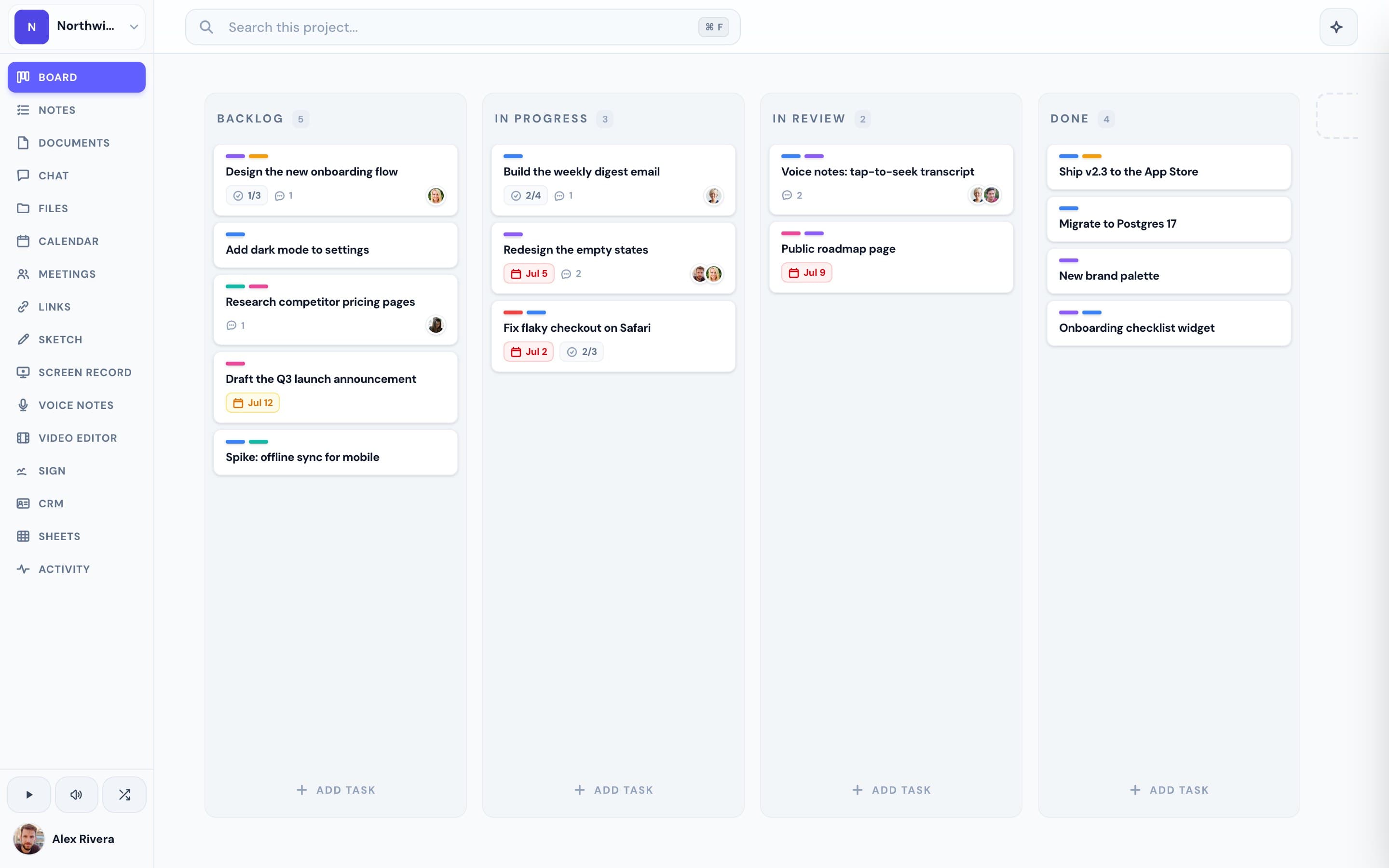
Create a project in Progress and it opens to a board with To Do, Doing, and Done columns already there. Add a card for anything on your plate, drag it into Doing when you start, and into Done when it's finished. Columns, labels, and card order are yours to rearrange — there's no fixed structure to fight.
Cards carry the details, not just a title
A card isn't just a line of text. Add a due date so it surfaces when it's coming up, break it into a checklist for multi-step tasks, and drop in notes for anything worth remembering later — a link, a reminder, a half-finished thought. Nothing gets lost between a to-do app and a notes app, because they're the same card.
It's a real project underneath, if you want more
Because the board lives inside a Progress project, your notes, calendar, and files are one click away if a personal task grows into something bigger — planning a trip, running a job search, tracking a home renovation. You don't have to touch any of that to use the board; it works fine on its own.
Common questions
Can I use Progress for just personal tasks, not a team?
Yes. A project in Progress is just a workspace — nothing requires inviting anyone else. Plenty of the board gets used solo, for personal to-do lists, errands, or side projects.
Can I rename or add columns beyond To Do, Doing, Done?
Yes. The three-column setup is a starting point, not a limit — add, rename, or reorder columns to match how you actually work.
Is there a mobile app?
Progress works as a web app and has an iOS app, so you can check off cards from your phone.
What does it cost?
Progress is free during the open beta.
Features that make it work
Compare
More use cases