
What you get
- One project per client: proposal, contract, calls, and deliverables all in one place
- Booking pages synced to your Google Calendar for discovery calls and check-ins
- Built-in e-signature (Sign) for contracts and scope docs
- Meetings clients join from a plain link, no account required, with AI meeting notes
- A lightweight CRM that logs every interaction, per client
- A project-aware AI assistant that already knows the client's context
The usual setup, and where it breaks down
Five apps, one freelancer
A typical setup: Calendly for booking calls, DocuSign or HelloSign for contracts, Zoom for the calls themselves, Trello or Notion for the work, and a spreadsheet or your inbox for tracking who's paid. Every new client means logging into all five again.
Nothing talks to anything else
The signed contract doesn't sit next to the call notes. The call notes don't link to the deliverable. When a client asks what was agreed to, you're searching four apps and your inbox to answer.
You're also the ops department
There's no one else catching what slips. Chasing a signature, prepping for a call, remembering to follow up with a client you haven't heard from in three weeks: on a solo team, it's all on you.
| Progress | The usual stack | |
|---|---|---|
| Booking a call | A booking page tied to your Google Calendar, inside the project | A separate Calendly link in your email signature |
| Contracts and sign-off | Built-in e-signature (Sign), attached to the project | A standalone DocuSign or HelloSign account |
| Client calls | Meetings guests join from a plain link, no account, with AI meeting notes | Zoom or Google Meet, plus notes typed by hand |
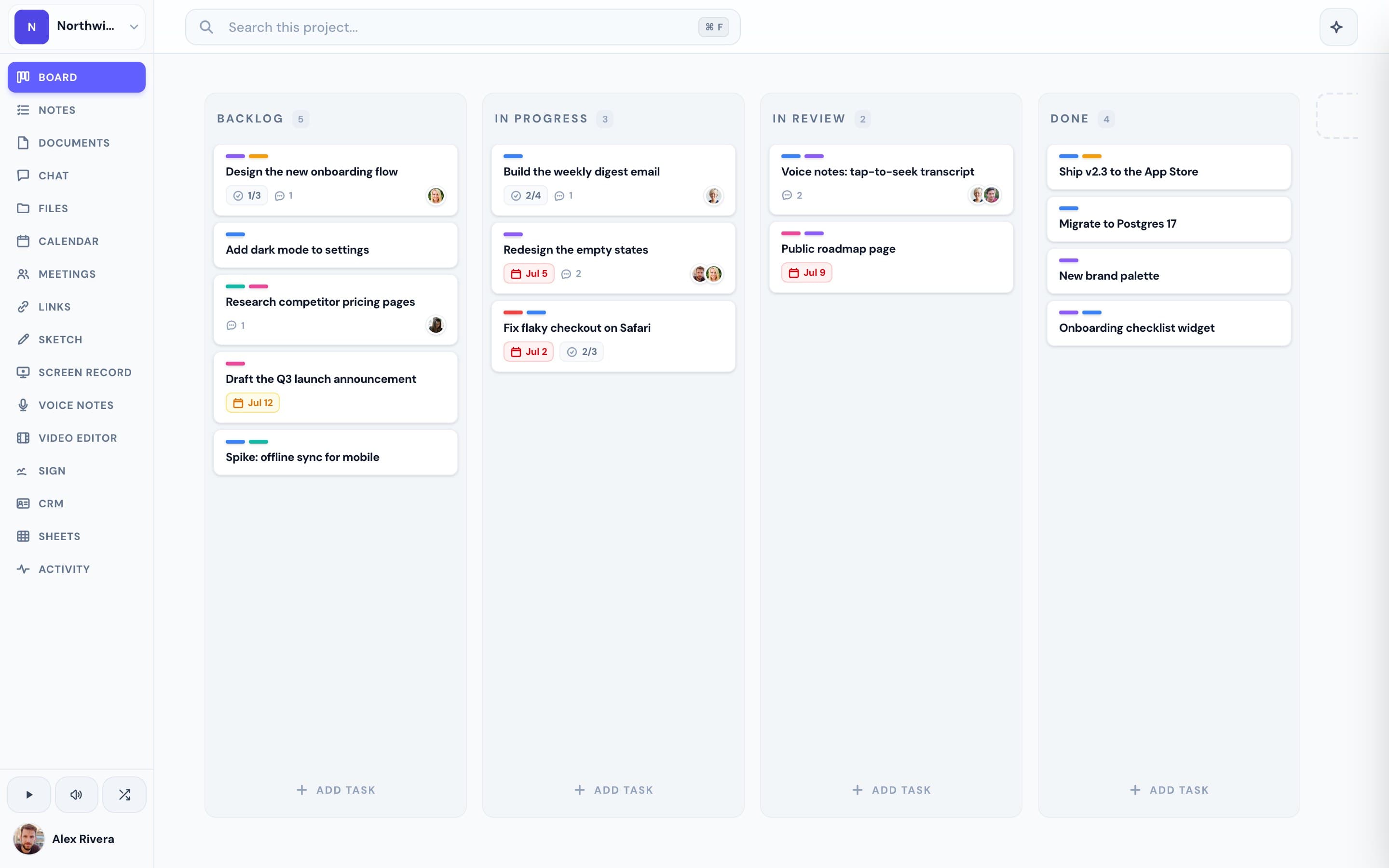
| The actual work | A kanban board, notes, and files in the same project as the client's history | Trello, Notion, or Google Drive, disconnected from everything else |
| Client history | A lightweight CRM logging interactions against each project | Your inbox, a spreadsheet, or memory |
| Cost | Free during the open beta | A booking tool, an e-signature tool, a video tool, and a notes app, each billed separately |
One project per client, not five logins
Start a new client in Progress and you get one project: a workspace for that client alone. The proposal lives in Notes & Documents. A booking page handles scheduling the discovery call. The contract gets signed with the built-in e-signature tool. The work itself happens on the board, in files, and in chat if the client is collaborating with you directly. It's one filing cabinet per client instead of a drawer in five different ones.
The history stays with the client, automatically
Meetings held inside Progress get AI-generated notes that flow into the project, so a call about scope doesn't evaporate the moment it ends. The lightweight CRM tracks the relationship itself: every touchpoint logged against the client, not buried in your inbox. Next time a client asks what you decided, the answer is a project away, not a memory.
Common questions
Does Progress handle invoicing?
Not directly. Progress doesn't send invoices or process payments. What it does give you is everything around the invoice: the signed contract, the deliverables, and a CRM history of the relationship, so you have the paper trail when it's time to follow up on payment.
Can I keep each client's work completely separate?
Yes. Every client gets their own project, with its own board, notes, files, and chat. Nothing crosses between clients unless you invite someone into a specific project.
Do clients need to create an account to work with me in Progress?
For meetings, no: guests join from a plain link, no sign-up required. For anything inside the project itself, like commenting on the board or joining chat, a client you invite in needs an account, the same as any collaborator.
What if I already use Calendly, DocuSign, or Zoom?
Move at your own pace. Start a new client in Progress and keep your existing tools for ongoing ones. There's no automated importer yet, so bringing past clients over is manual; reach out through in-app support if you want help planning it.
Features that make it work
Compare
More use cases